Editor’s note: This story was originally published in March 2026.
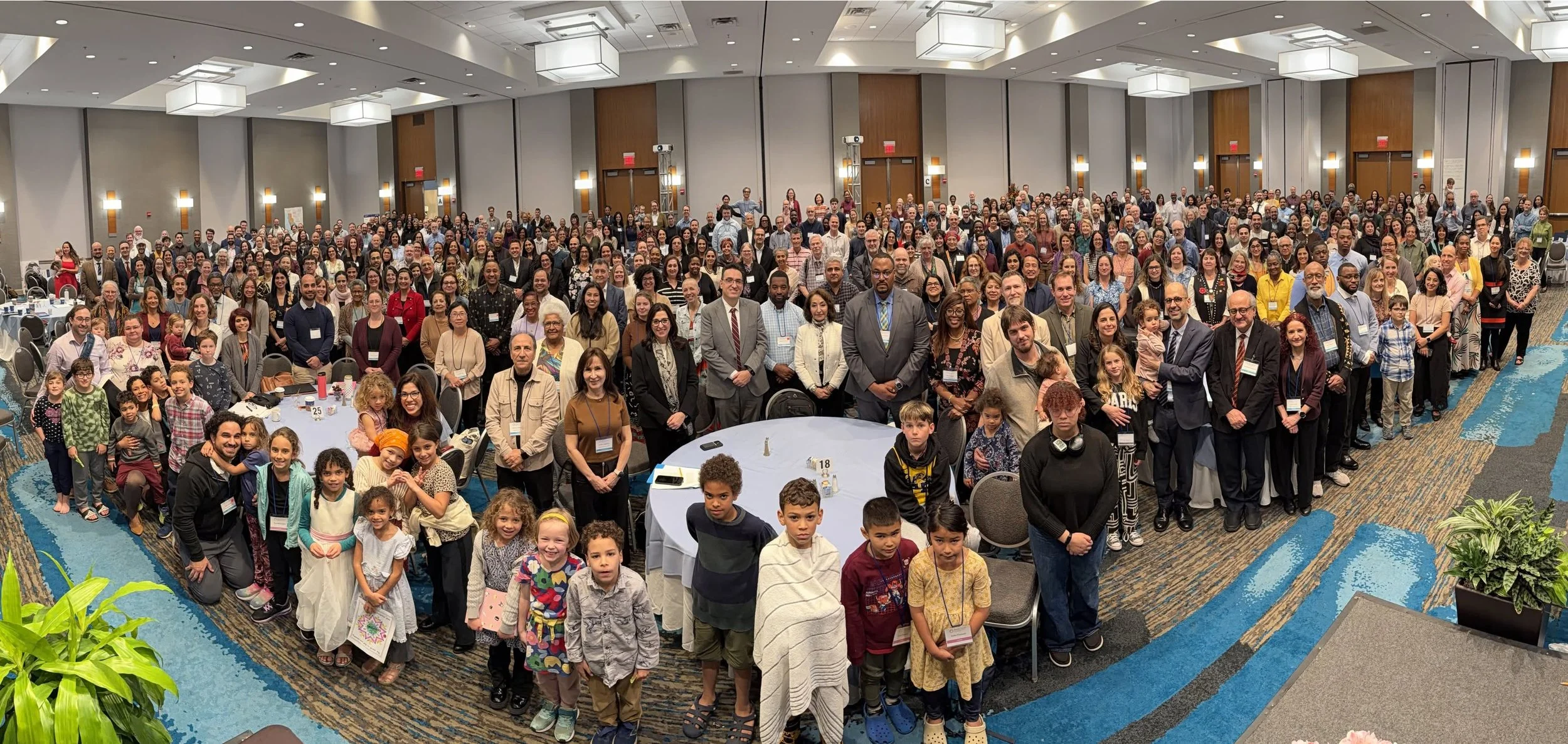
PENSACOLA, FL — When ‘Abdu'l-Bahá stepped from the S.S. Cedric onto a New York City pier on April 11, 1912, He was greeted by a small crowd of inspired souls. As He spoke words of praise and encouragement to them, He was also looking towards a distant horizon of global unity. Over a century later, as more than five hundred members of Bahá’í institutions from across the United States, Alaska, and Bermuda gathered for a national meeting in Pensacola, Florida, this January to reflect on the progress of the Nine Year Plan, that once-distant horizon glimpsed by the Master is now brightening.
Much has been learned in the four years that have passed since the Universal House of Justice inaugurated the Nine Year Plan in its 30 December, 2021, letter to the Continental Board of Counselors, part of a series of global plans whose central goal is “the release of ever-increasing measures of the society-building power of the Faith”. This reflection, at the midpoint of the Nine Year Plan, occurred against a backdrop of what was described as a gathering storm on the global horizon, characterized by the escalating tensions of materialism, racism, and social division that continue to affect societies worldwide. In response to these “travails of society,” participants consulted on the urgent need to build communities that offer hope in place of despair and function as havens of peace for a harried humanity.
The Movement of Clusters
Central to the discussions was an analysis of the movement of clusters along a continuum of development, with a focus on raising clusters to the third milestone. As the 31 December 2025 letter from the Universal House of Justice describes,
The third milestone is a measurement of a journey whose beginnings are well understood. Once it is passed, clusters where progress has been consolidated can be seen to share important features. The institute’s programmes are being supported by a relatively substantial and expanding pool of human resources. Effort is being made to enable more neighbourhoods and villages to sustain intense activity. There is a capacity to embrace large numbers and manage increasing complexity through both formal and informal arrangements. Crucially, in these clusters, consistent attention is being given to sustaining effective cycles, so that there is a regular pulse of study, consultation, action, and reflection through which the community enhances its capacity to grow and to contribute to the advancement of the society to which it belongs. These cycles include periods of particular intensity, an injection of energy that is propelling the engagement of the widest possible circle of friends. Community undertakings such as family festivals, junior youth camps, service projects, arts endeavours, and collective teaching initiatives are proceeding according to their own respective rhythms. Reflection spaces bring together many friends, and the use of such spaces is thoughtful and deliberate—there is awareness that the quality and utility of reflection is measured by the purposeful action arising from it. From these clusters, resources flow to surrounding clusters to help the friends there make accelerated progress.
Such clusters move beyond seeing activities as isolated events, integrating worship and service into the daily patterns of life. Collaborative arrangements—natural groupings of families, youth, neighbors, friends, or colleagues—begin to organize their own efforts to improve community life, without requiring new administrative layers. As these endeavors take root, the community itself becomes a highly visible protagonist in society, sometimes leading local leaders and authorities to reach out for moral insight and collaboration. Resources and experience flow between clusters that have passed the third milestone and surrounding clusters, and these communities closely accompany and encourage each other in the fields of study and action. In the second half of the Nine Year Plan, several goal clusters across the Northeast have been identified as having the conditions present now to quickly move past this third milestone.
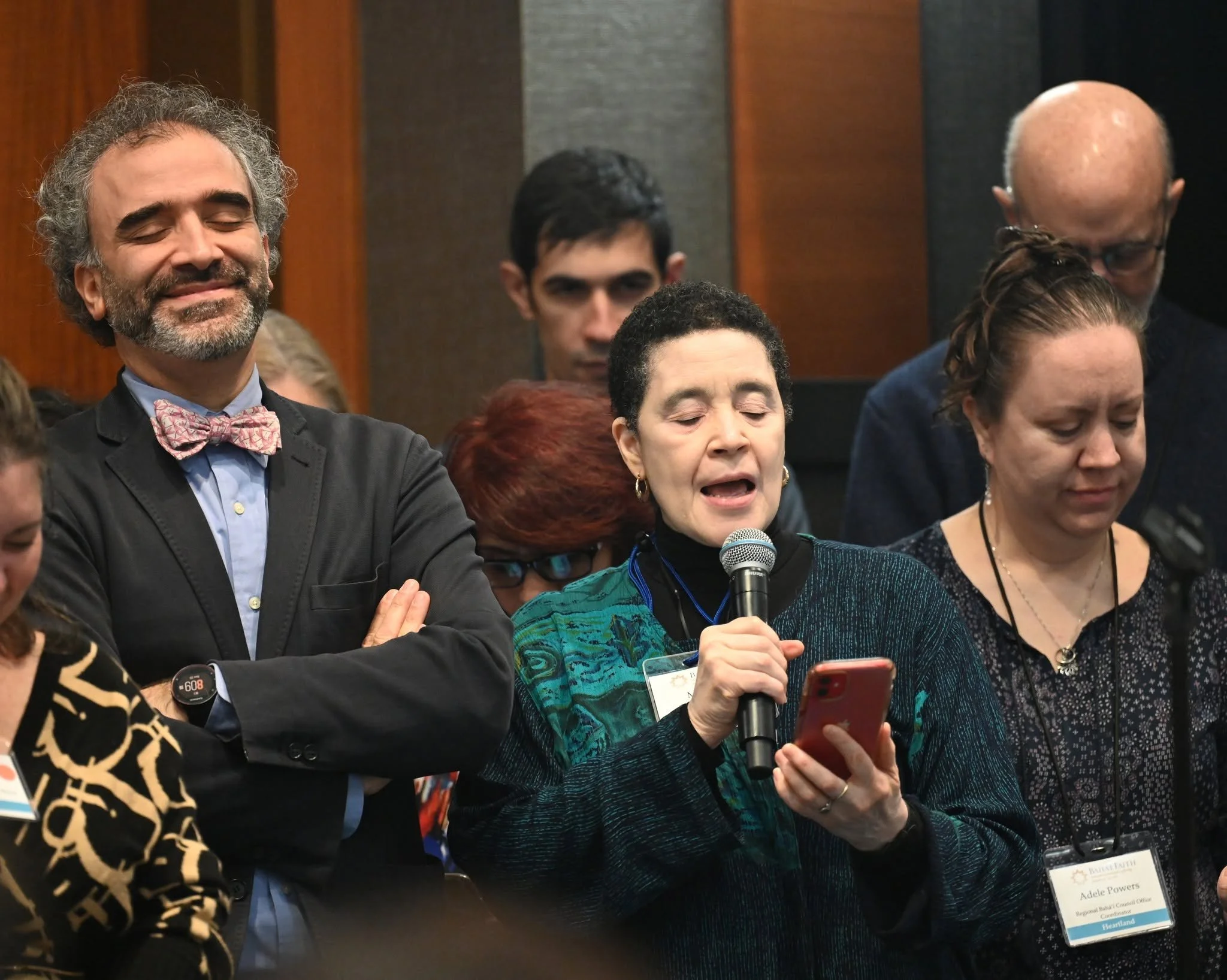
Friends offering prayers during a plenary session of the gathering
Vibrant Communities Across the Northeast
Across the Northeast, communities are experiencing a transformation in light of Bahá’u’lláh’s Revelation. Patterns of community life, united by prayer, increasingly come to be defined by strengthening bonds of love. Friends and family work together to offer educational programs for all ages. And stirrings of social action are emerging as these community-building efforts take root and participants become more conscious of social barriers and needs.
In New York City, animators are providing direct support to families and junior youth applying to schools, a need identified as essential for eighth graders transitioning out of the junior youth program. In Chelsea, Massachusetts, a team created a financial literacy workshop to address debt and credit management after these needs repeatedly surfaced in conversations. Educational support has also taken the form of sustained homework help programs in Boston, which supplement school instruction in foundational subjects like mathematics.
Collaborative family arrangements have led to environmental and safety projects, such as a park cleanup effort in Mission Park, a neighborhood in Boston. In Philadelphia, friends have established “peace parks” that serve as refuges from gang violence. Rochester, New York, is home to a grouping of families that coordinate their own efforts to support adult family members with disabilities, sharing resources and presenting their progress to state entities to help improve broader support systems. On Long Island, a local Bahá’í center realigned its focus toward outward-facing service, collaborating with other organizations to distribute food to the community during economic disruptions and government shutdowns.
A book club for Russian-speaking women in the Germantown area of Philadelphia evolved into a nonprofit empowerment network that eventually secured its own space for spiritual and educational activities for women and families. In New York City, English classes have been organized for immigrant mothers to support their settlement and professional integration. Finally, artistic natural groupings have appeared, such as a group of artists in Rochester who are collaborating on a mural project designed to generate joy and unity through shared creative expression.
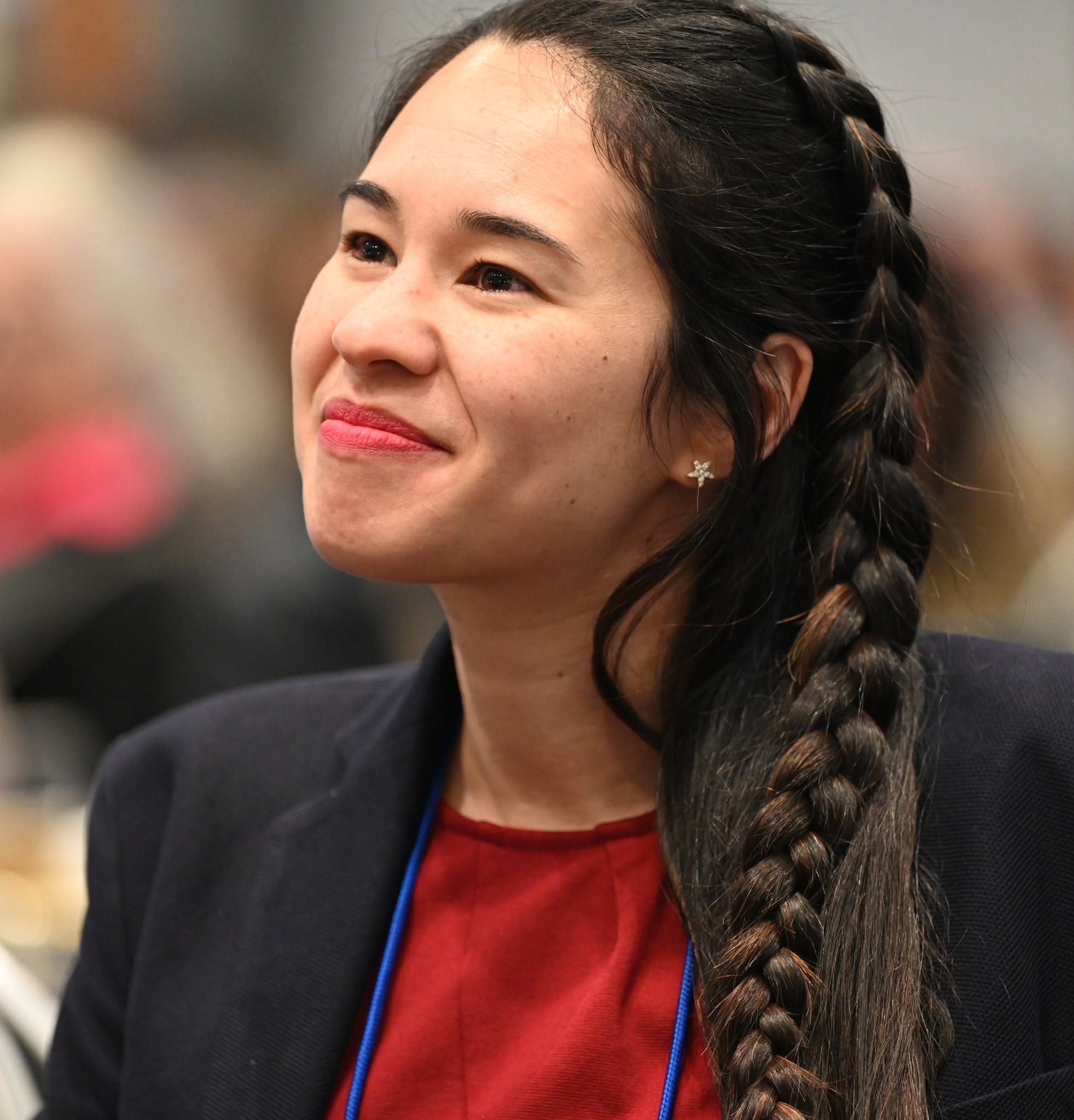
Saphira Rameshfar, a member of the National Spiritual Assembly of the Bahá’ís of the United States
Youth Efforts at the Vanguard of Community Transformation
Discussions also noted the pivotal role of youth, who are being called upon to soar in their service as teachers, animators, and coordinators. Collaborative partnerships with schools in urban areas in the region were identified as promising ways to reach larger numbers of youth and junior youth. These school-based initiatives have proven successful in overcoming logistical barriers and building trust with parents, quickly moving from a trickle of participation to a substantial flow of human resources.
This progress is supported by an increasingly formalized educational system offered by arrangements of the regional training institute, ensuring steady progress through institute materials. As one illustration of how workers are thinking more systematically about these educational efforts, a team of institute collaborators in Boston collected data on how long it took, on average, to study the main sequence of courses, and determined that if monthly intensive camps were offered, a typical participant could complete the sequence within four years. That community is now planning to hold monthly institute camps for youth so that high school students can finish the main sequence by the time they graduate high school.
And the Summer of Service program was highlighted as perhaps the most effective strategy in the Northeast for raising the capacity of young people to serve and to catalyze and accelerate community-building efforts in neighborhoods across the region. Summer of Service provides a strong vision of a unified youth movement and a structured way to share resources and experiences between burgeoning neighborhoods and ones with more experience, and its logistical complexity also gives opportunities for diverse groups to offer service, raising the capacity of individuals and groups to tutor and facilitate activities, visit neighbors in their homes, work with schools and other local organizations, think about material needs, host deepening spaces, offer meals, housing, and transportation, and more.
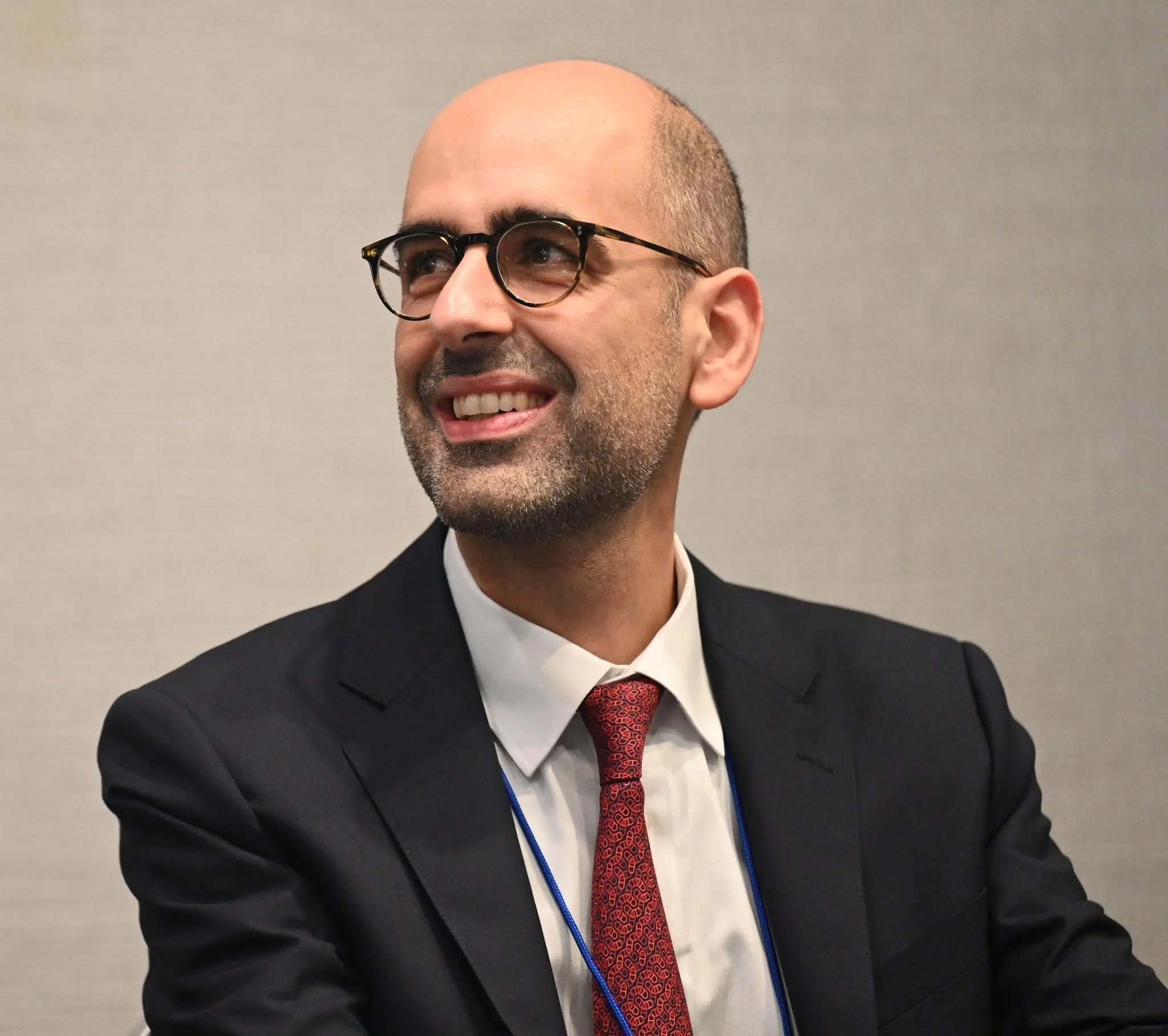
Counselor Vafa Akhtar-Khavari, a member of the Continental Board of Counselors of the Americas, who serves the regions of the Northeast and Appalachia
Institutional Evolution and the Ecosystem of Learning
Among all of our efforts, perhaps the single most important capacity we work to develop is that of learning. We are all learning to see with the eyes of justice, to read our local realities and apply and contextualize lessons from other communities, to work more systematically, and to invite participation from growing circles of our compatriots. Institutions serve as the caretakers of this ecosystem of learning that is characterized by an exchange of insights from the grassroots upward. Their role is to help foster an environment in which we all can learn together through relationships defined by humility and magnanimity.
Local Spiritual Assemblies facilitate this flow by adopting a mindset that allows for many to be formally welcomed and by, for example, treating the Nineteen Day Feast as a laboratory of learning. In some large clusters, Assemblies have decentralized these Feasts, which has raised attendance and has shifted the quality of consultation toward the specific spiritual and social realities of individual neighborhoods. These Assemblies also share the responsibility for coordination and planning with cluster agencies, ensuring that advice and resources are directed where they are most needed as lines of action multiply and interact. By guiding large consultative spaces, Local Spiritual Assemblies help channel diverse ideas into purposeful action while maintaining the integrity of the community’s many endeavors.
Area Teaching Committees and other cluster agencies play a vital role in identifying and grouping expanding nuclei to ensure they have regular reflection and planning spaces with institution members. These agencies work systematically in cycles of study, consultation, action, and reflection, using spaces like cluster institutional meetings and reflection gatherings to mobilize the generality of the believers. For example, in Boston, the Area Teaching Committee mapped out nuclei to facilitate more intimate connections with coordinators and to understand how to connect disparate participants to one another through home visits. Individual committee members further support this flow by carrying out home visits themselves to ensure that grassroots nuclei remain supported and engaged in a continuous learning process.
At the subregional and regional levels, the flow of learning is reinforced through institutional meetings and collaborative groups that bring together members of the Regional Bahá’í Council, regional training institute, and Auxiliary Board members, and others. These spaces allow for a common reading of reality and the analysis of patterns emerging locally, which are then shared more broadly through groupings of training institutes. Regional institute coordinators take responsibility for raising up cluster-level coordinators and are reinforced by teams of friends who organize seminars to explore pedagogical principles in depth. This systematic exchange of experience enables reservoir clusters to disseminate insights and mobilize human resources to adjoining clusters, accelerating the progress of the entire region.
America’s Spiritual Destiny
Of particular note were comments shared by two members of the International Teaching Center who were in attendance. Regarding the process of transformation underway in America, one Counselor emphasized that we must learn to speak about the Plan in a language that addresses the diverse concerns and aspirations of the American people. Universal participation is required. This means that our fellow citizens are not merely participants in activities, but true protagonists who must be invited to take ownership of the Faith's administrative and financial life, including contributing to the Fund and participating in Bahá’í elections. “The United States wants to participate in the Nine Year Plan,” this Counselor remarked, “even if they don’t know it yet.”
A Common Endeavor: A message from the Bahá’ís of the United States, marking the 250th anniversary of the founding of the country and inviting all Americans to a thoughtful conversation about our shared purpose
The other Counselor in attendance emphasized the importance of reading local reality to truly understand the needs and aspirations of a community. The work of the Plan is like building infrastructure for the delivery of clean water to a town in a drought. We can imagine any number of details that an advanced water infrastructure might eventually have, like a network of underground pipes, water treatment plants, reservoirs and dams, and more. But when people are dying of thirst, it is enough to start with delivering bottles of water immediately and work from there.
Such a metaphor must be tempered by the recognition that community development is only truly effective when its focus is on building the capacity of a population to take ownership over its own education and progress. The Counselor urged Bahá’ís to give the institute to the wider society rather than maintaining a sense of ownership over the process, observing that in places where the process felt like it belonged solely to Bahá’ís, growth often plateaued. The Counselor challenged the American believers to consider how to scale up our strategies to achieve large numbers and bring about genuine social change.
As we enter the second phase of the Nine Year Plan, our vision remains centered on the profound alteration of thought and action required to eliminate ingrained prejudices and to establish a divine civilization that reflects the oneness of humanity. In every cluster across the Northeast, from the densest urban pockets to rural communities, each of us bears the responsibility of carrying forward this work of building havens of peace side by side with our friends and neighbors, work which is no less than seeking the remedy to all that ails a rapidly decaying society. And as we seek to build vibrant communities, we know we are working towards the vision for America that the Master described upon His arrival in New York City, that these communities may be filled with souls who are like clear lamps of crystal “from which the rays of the bounties of the Blessed Perfection may shine forth to all nations and peoples.”
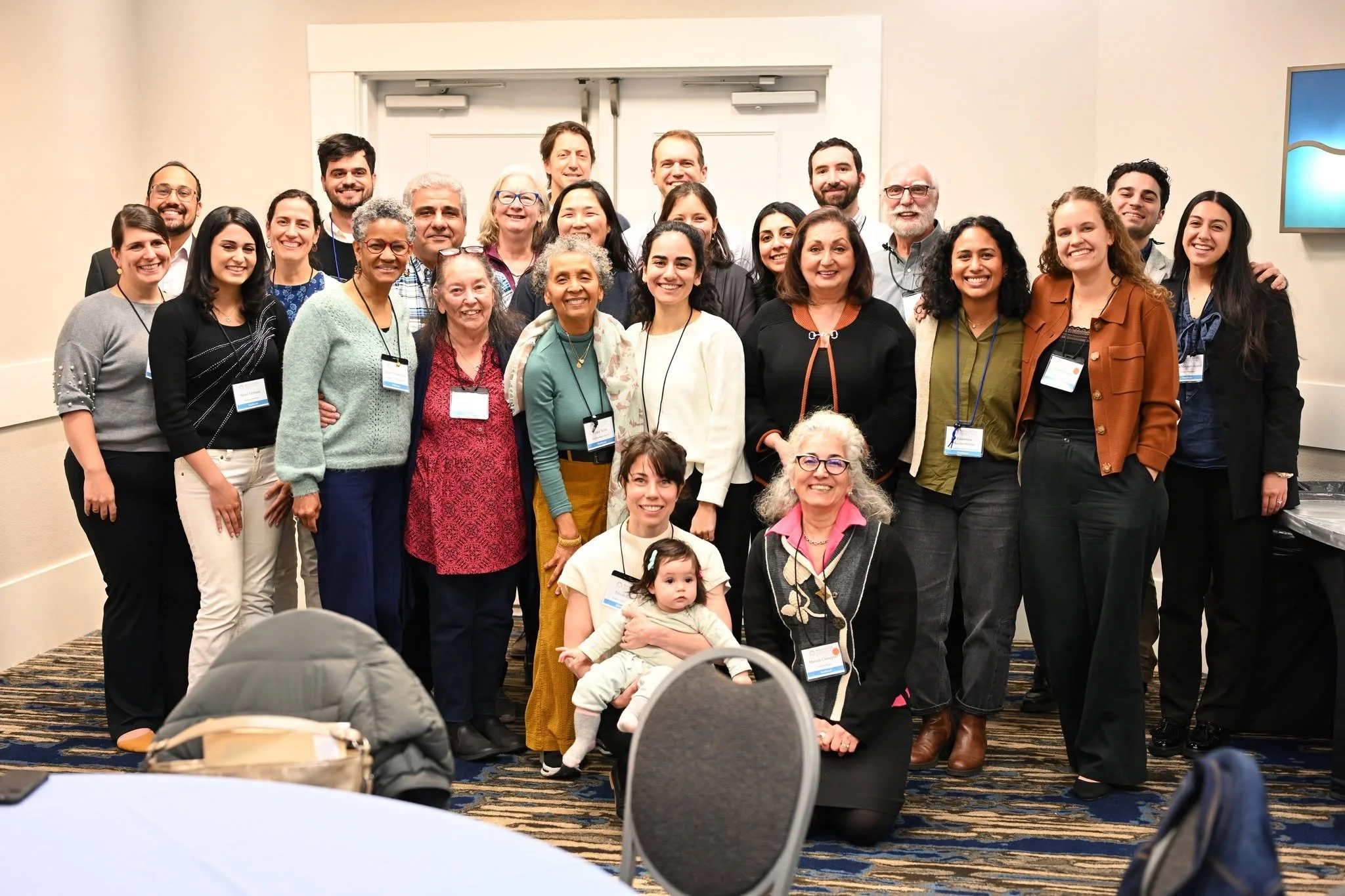
The friends from the Northeast who attended the gathering